


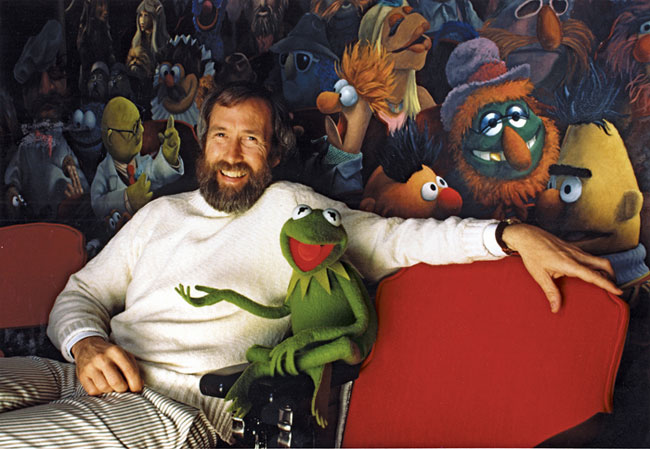
(Photo by John E. Barrett, courtesy of The Jim Henson Company. Kermit the Frog © The Muppets Studio, LLC.)
Jim Henson’s characters provided an outlet for the various sides of his sense of humor and personality.,
Before they became international stars, Kermit, Miss Piggy, Bert and Ernie were gleams in the eye of genius puppeteer Jim Henson. The genesis of the Muppets is described in “Jim Henson’s Fantastic World,” an exhibit and series of programs organized in collaboration with the Smithsonian Museum at the newly refurbished Museum of the Moving Image in Queens (across the street from the studio where Muppet shows are shot). The program runs through mid-January.
Very early works show Henson experimenting with poster designs and cartoons during his days as a student in Mississippi and at the University of Maryland, where he and his future wife and partner Jane Nagel met in a puppet class. “Sam and Friends,” an early television show they produced in Washington, D.C. led to guest appearances with Arthur Godfrey, Will Rogers, Jr., Steve Allen and the Tonight Show.
By the 1950s, the quirky “Muppets” were established and recruited to appear in humorous commercials for Wilkins Coffee, Linit Fabric Finisher, and Purina Dog Food, eventually landing regular slots on the Ed Sullivan Show.
It was in 1968 that the PBS special “The Muppets on Puppets” was aired, leading to the premiere of “Sesame Street,” with its iconic cast of quirky characters, the following year. Ten years later, the ensemble that collaborator Frank Oz called “affectionate anarchy” starred in the “The Muppets Go Hollywood,” and Kermit the Frog guest-hosted the Tonight Show.
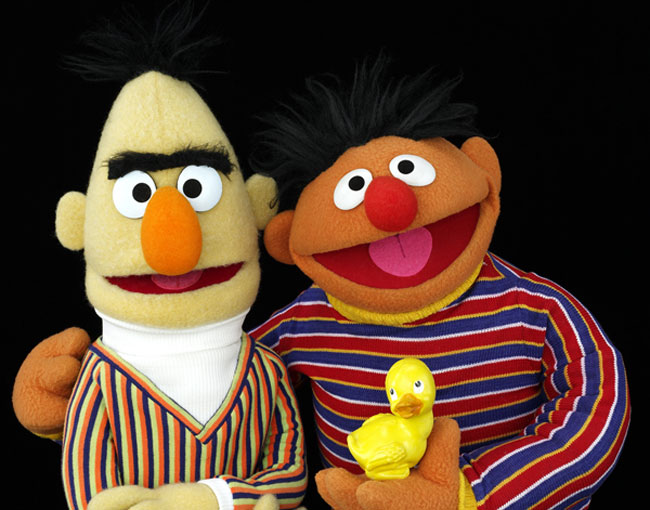
(Photo by John E. Barrett. TM & © 2007 SesameWorkshop. All Rights Reserved.)
Bert and Ernie are two popular characters in the Sesame Street neighborhood. Henson believed that television and film could be used in a positive way to shape the thoughts of children and adults.
Miss Piggy, Kermit and Rowlf are among 14 original puppets on display. Before making the puppets, Henson said, he started with sketches of a personality type or attitude and worked with them on paper until they seemed to take on a whole quality of the personality. Visitors can see how the characters evolve from drawings, and a pencil sketch shows the groundwork for Henson’s design of the internal mechanisms that control the Muppets’ facial expressions.
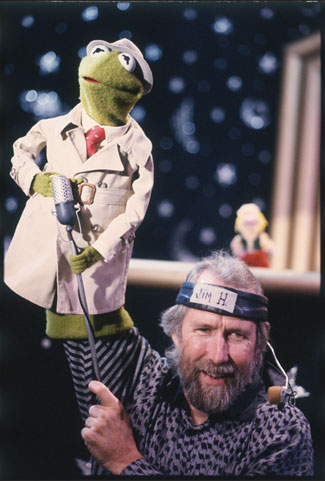
The original Kermit, fashioned out of Henson’s mother’s spring coat and a pingpong ball, was left unstuffed so that each tiny finger movement results in a subtle change of expression. Henson noted the parallels between his personality and the frog’s: “He’s sort of a comfortable middle-of-the-roader—very much what I am. I have the feeling he’s desperately trying to keep things rolling. And he’s surrounded by all these crazies.”
Besides video snippets of the early commercials, television appearances, the Muppet movies and their sequels, the museum is showing “Time Piece,” Henson’s full-length stream of consciousness short film nominated for an Oscar in 1965 which further illustrated his range of imagination and creativity. A calendar selection of events lists full-length Muppet films, documentaries, workshops, and appearances by staff members. All are free with museum admission.
The museum is an easy walk from the Steinway stop of the R subway and the 34th Avenue stop of the M train, or the 36th Street Stop of the N and Q trains.
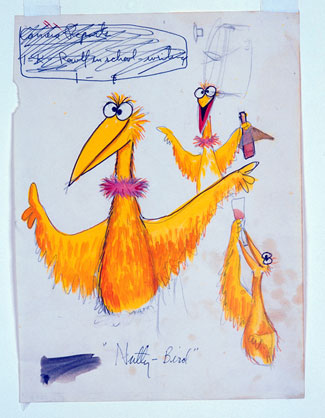
sketch: (©2007 The Jim Henson Company. All Rights Reserved.)
Henson developed hundreds of characters and designs for commercial purposes, starting with sketches such as this wacky bird created for Royal Crown Cola in 1966.
ABOVE: (Photo courtesy of The Jim Henson Company. Kermit the Frog © The Muppets Studio, LLC.)
Jim Henson with Kermit the Frog in 1978 on the set of The Muppet Movie. Henson always consider Kermit to be his alter ego
