


Sergio Mercado was able to do something that most designers only dream of—he slept a few nights in the home whose interiors he had designed for a client. As he does every year, Mercado was set to attend the Hampton Designer Showhouse and when he mentioned the date to his client in Water Mill, she insisted he stay in one of the guest rooms he had created.
“It’s very rare that you get to inhabit a home you’ve designed,” says Mercado. “As a guest, you’re really given the opportunity to test things out—anything from figuring out whether the espresso machine is in the right counter spot to seeing if the drawers in the dresser work.” For this stay, Mercado occupied the pool house, though he had also done the interiors for the main residence.

The principal residence was built as a carriage house in 1896 and reflects its late-Victorian pastiche of brickwork, cedar shingles, and pitched roofs. Mark Matthews, the Southampton-based architect, fashioned a wholly new pool house in keeping with the architectural style of the main dwelling. He characterizes the two-bedroom house he designed on the site of a garage as “a true guest cottage instead of just a pool house.” And just as he sought to visually link the new dwelling to the old, so, too, did Mercado wish to have both dwellings echo each other in terms of interior design.
Although Mercado has completed numerous projects in New York City, the Hamptons, and upstate, he says that “the vibe out on the East End is definitely where I can best practice my signature style.” For this project, he admits to having been granted virtual carte blanche, an apt term for a designer who likes bleached, neutral, unfussy, muted interiors. But what might appear at first glance as simple, is in fact a perfect example of Mercado’s honed ability to exercise the art of restraint.
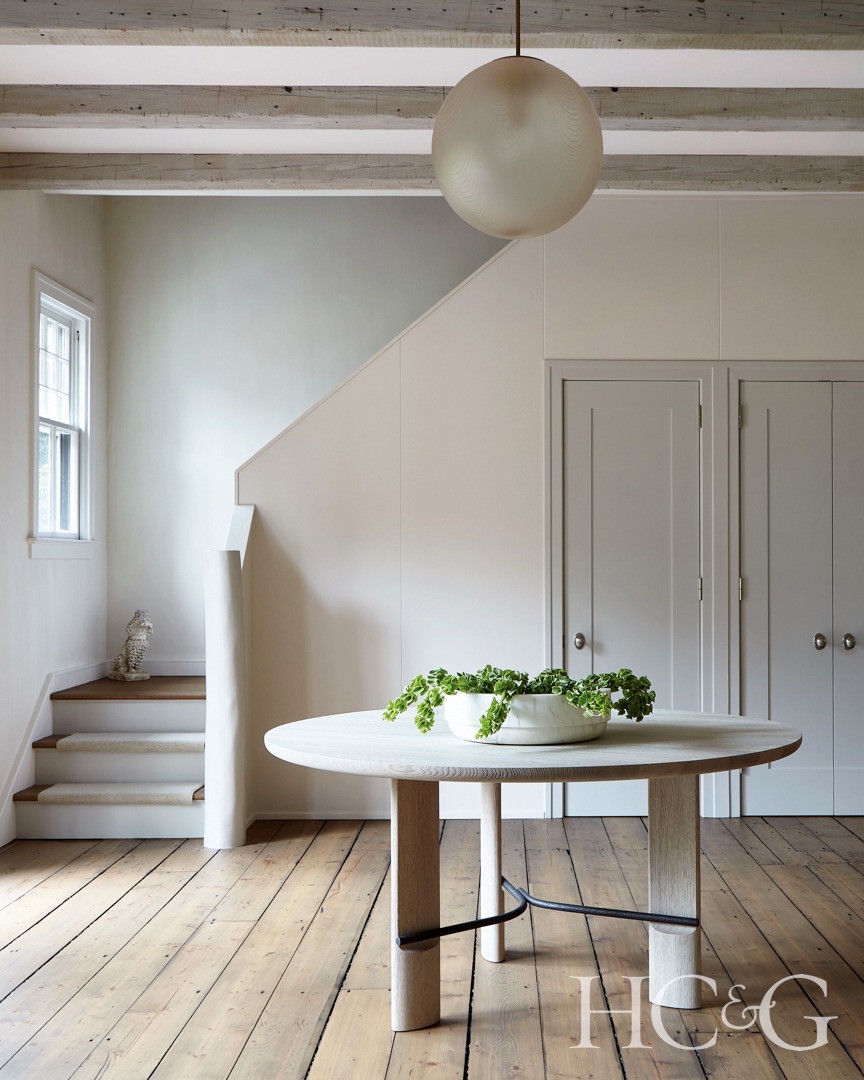
In the foyer, a vintage Murano glass globe pendant hangs above Christophe Delcourt’s Hub table.

A Christian Astuguevieille table from Holly Hunt sits next to a swivel chair by Man of Parts.

A sectional by Poliform rests atop a wool and silk rug by Rosemary Hallgarten. The artwork is by Judy Friday.
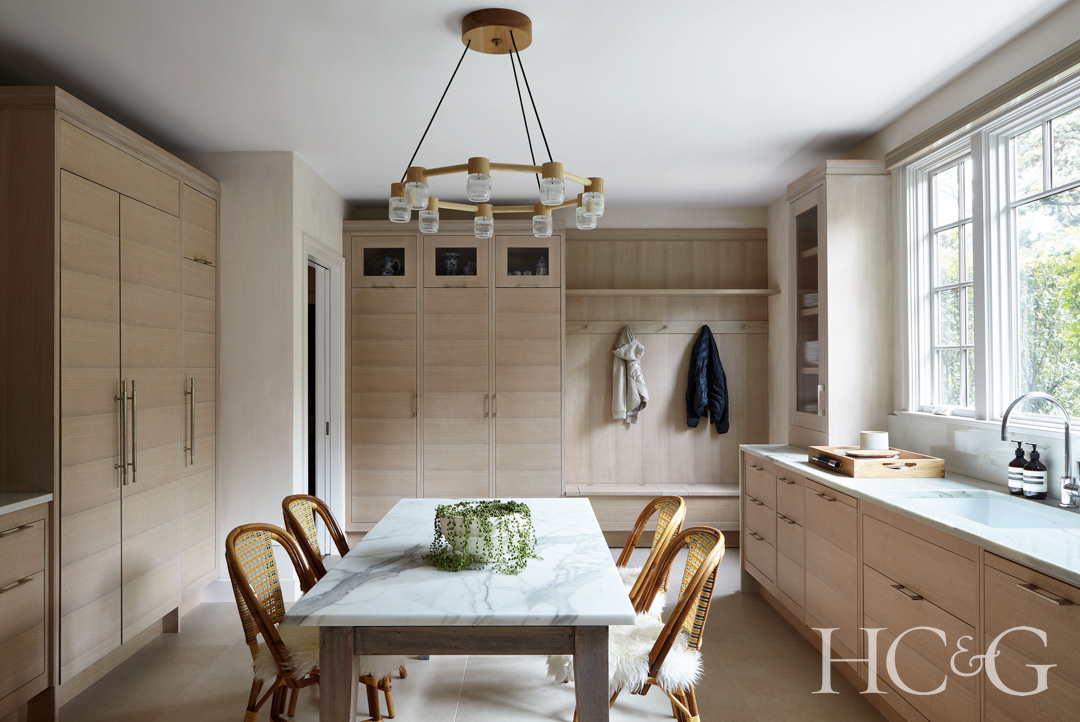
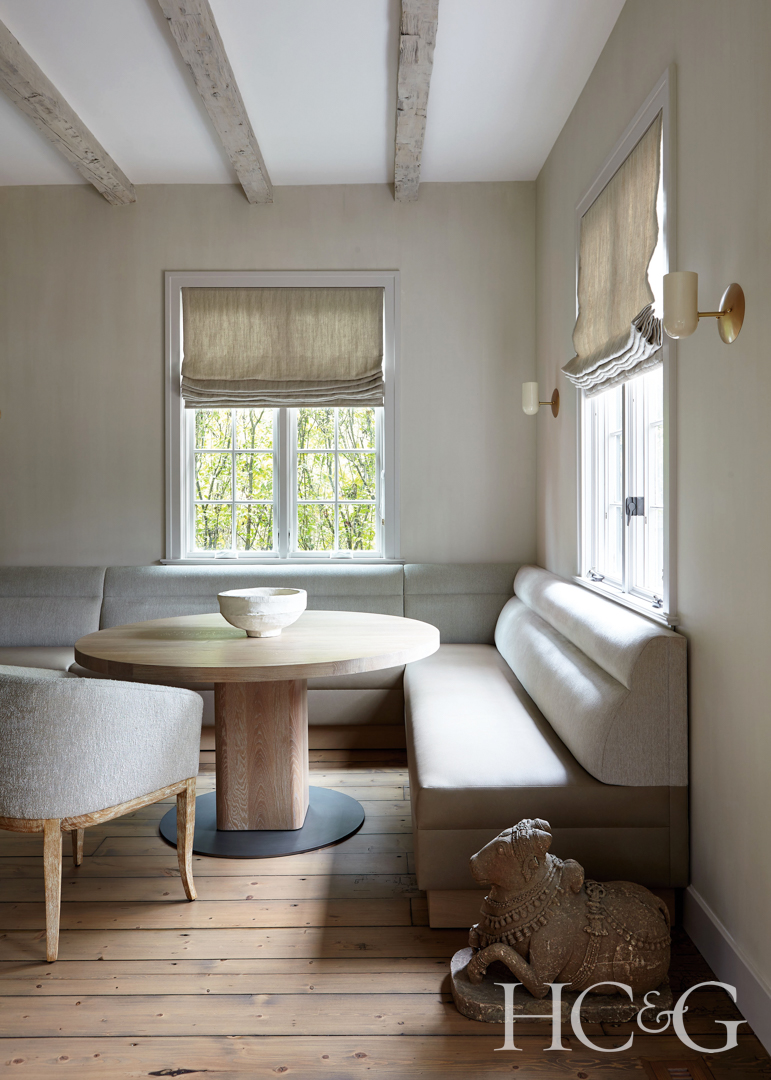
The Mercado-designed custom banquette was fabricated by Dune and is upholstered in Great Plains textiles from Holly Hunt. Ceramic wall sconces by Lindsey Adelman are from The Future Perfect.
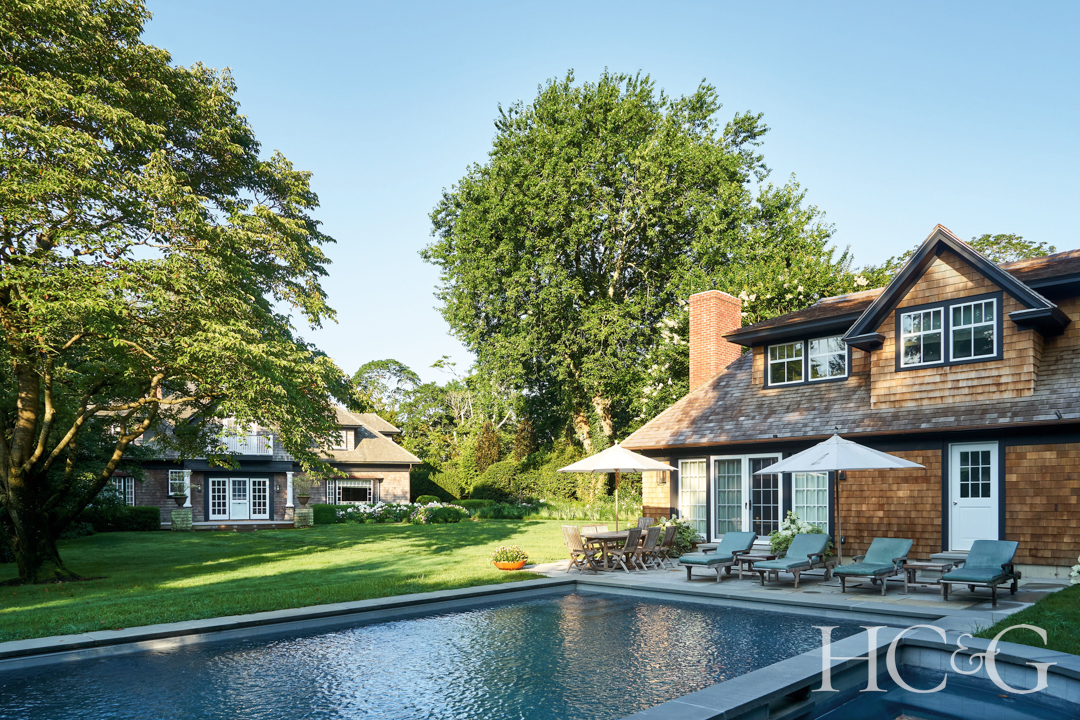
The pool house was designed by Mark Matthews Architecture. The umbrellas are by Santa Barbara Designs.
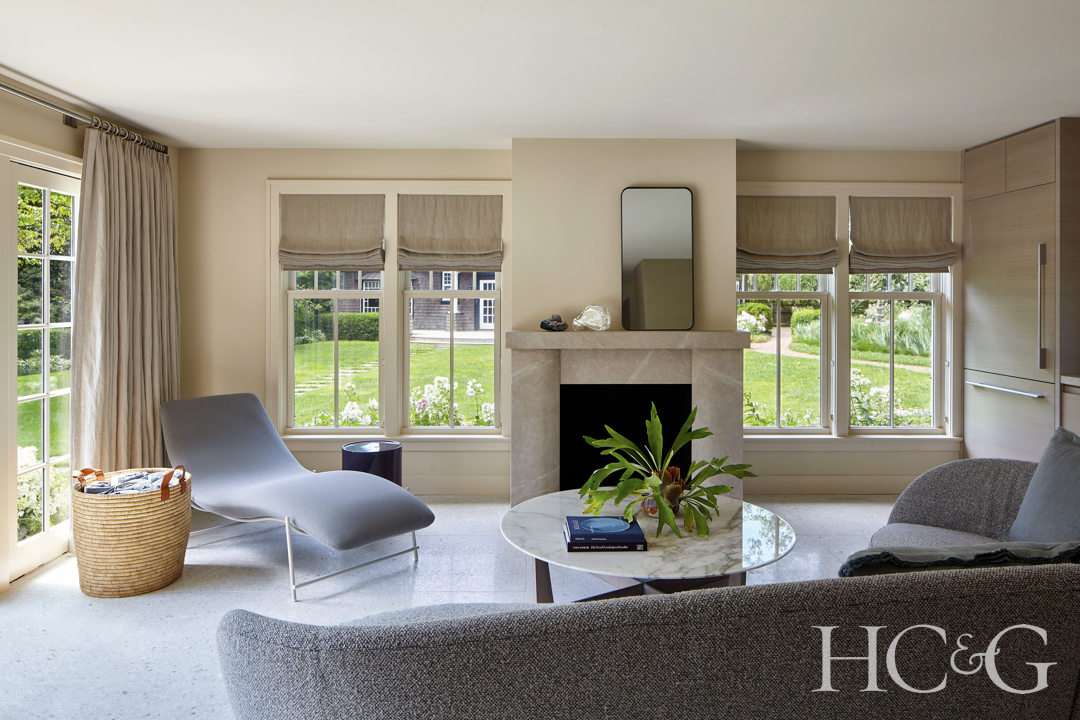
Mercado designed the pool house’s limestone fireplace surround and had it made by Miller Druck.
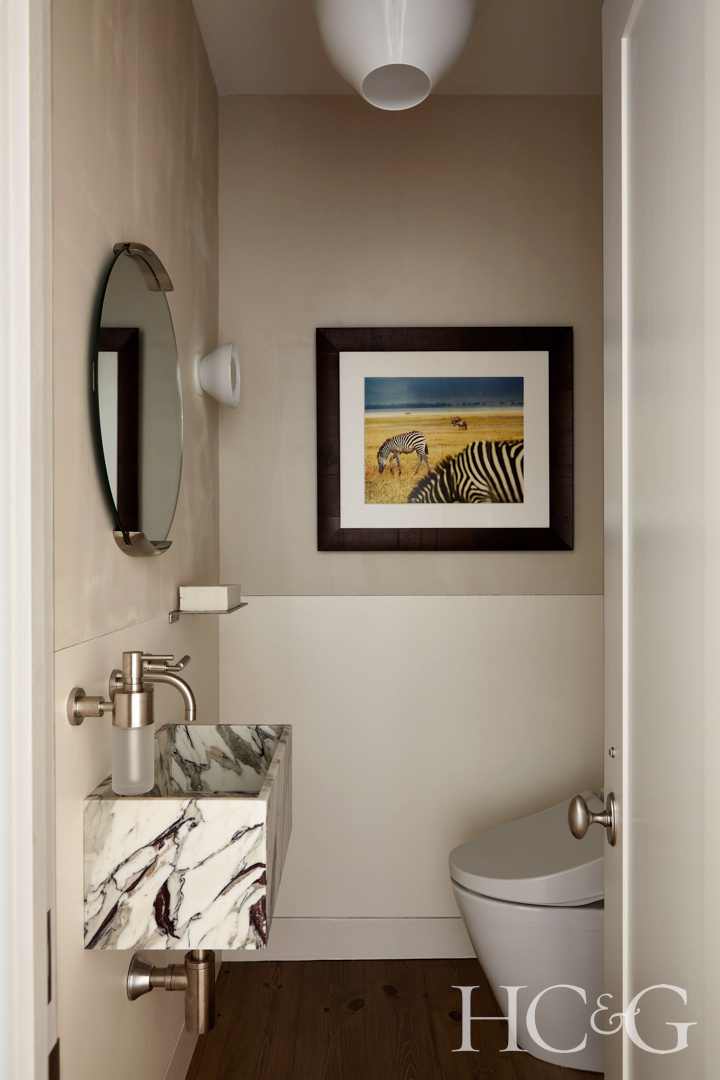
A Mercado-designed sink in the powder room is made of honed slabs of Arabescato Verde Marble. The mirror is by Waterworks.
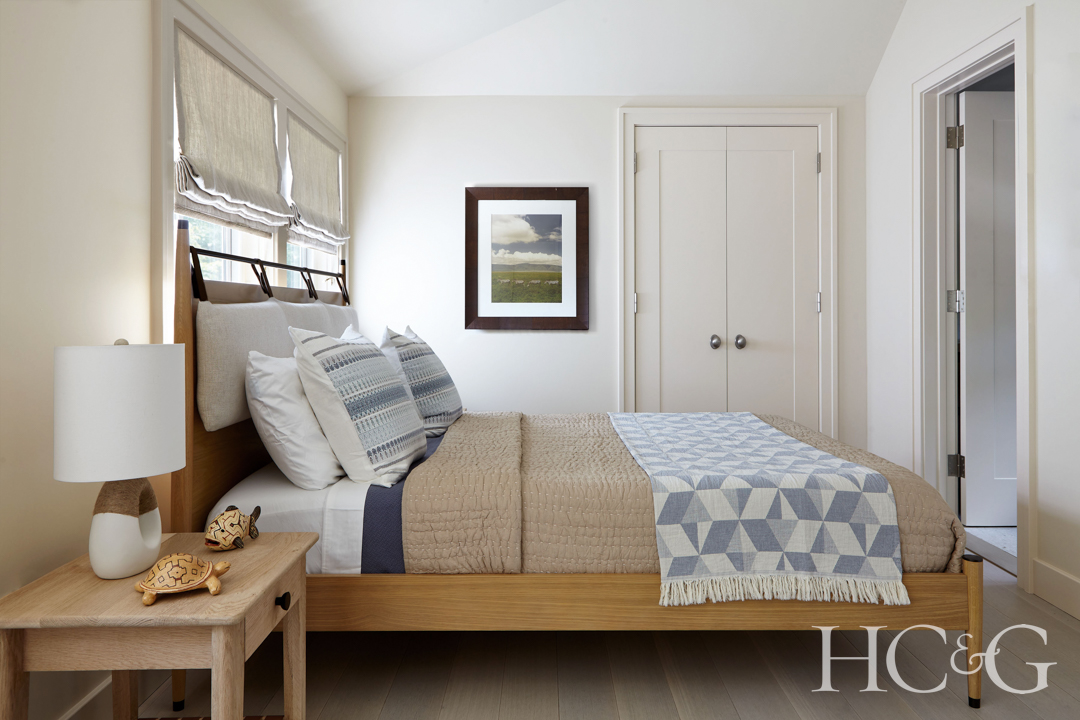
“She and I were speaking the same language from the start,” he says, referring to the client, an enlightened philanthropist (among other endeavors). “For instance, she suggested lime washed walls, and she was right.” Mercado rhapsodizes about the resulting visual texture that the process produces—a streaking effect that both captures and reflects light.
“I just love undyed natural textiles and that’s what we used as our springboard here,” says Mercado. Among the first changes was to expand and open up the entry, and to then have it meld visually with the living and dining rooms beyond. “The living room still had its original supporting ceiling beams, but the entry had none.” Mercado cleverly sourced antique oak beams, had them stripped, bleached, lightly stained, then coated with a matte sealer to replicate the beams in the other rooms. “The idea was to maintain the original feel of the house and honor its history.”

Mercado also professes a “love of corners,” pointing to a long sectional that courses the length of a bay window in the living room and wraps a windowed corner. He also likes shapes, as evidenced by his embrace of vigorous geometries—a rectangular coffee table that culminates in a sweeping curve, an exuberant Francois Salem ceramic Rubans lamp at the entry, and lighting fixtures that assume the presence of hovering sculptures. The entry is lit with an Italian frosted globe tinged with a muted rose hue, while an elliptical incandescent source in the dining room appears to wear a multi-tiered skirt of hand-painted porcelain pieces.
During his stay in the pool house/guest cottage, Mercado realized his work on the project was a success. “I’ve worked through many different design styles, but I know now that this particular project really reflects the aesthetic that represents my personal style. When a client gives you the freedom to create, without limitations, it results in work that makes you and them happy.
