


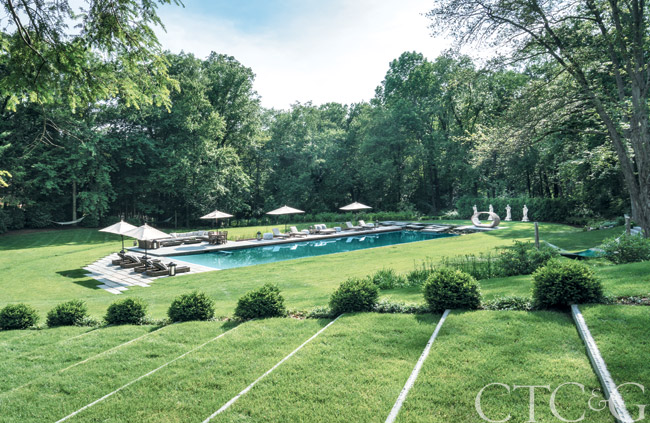
Bluestone planks lend a contemporary feeling beside the pool, along with “floating” bluestone stepping stones, one serving as a diving platform. A gray pebble finish was chosen for the pool interior. The original statues still stand against an evergreen backdrop. Classic lawn steps connect to the residence, uphill.
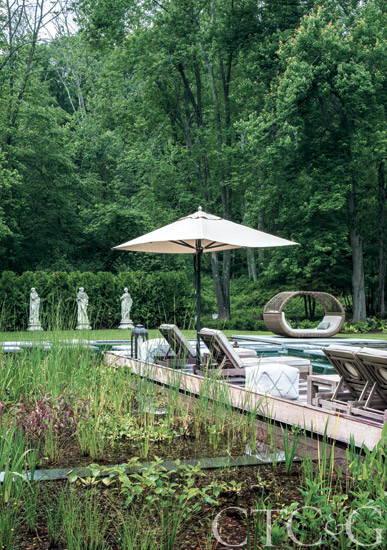
The natural pool is divided into three zones: swimming, shallow regeneration and deepwater regeneration, with all areas sharing the same body of water. Wetland and native plants provide a buffer at the lawn’s edge. Native emergent and pond plants like Carex, Acorus, Iris, Juncus, Lobelia, Pontederia and Typha filter water in the shallow zone. An Ipe boardwalk runs the length of the pool, providing interaction with the adjacent shallow regeneration area, and connecting to the deepwater regeneration area, designed as a lily pond.
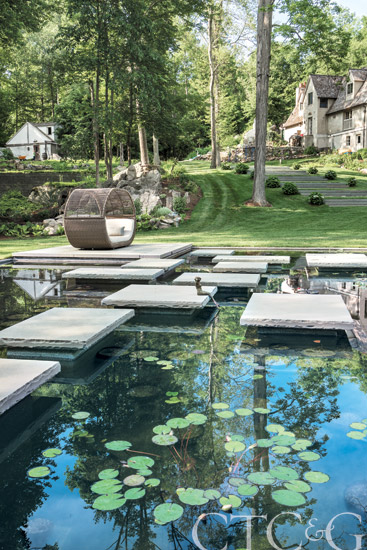
Oxygenating plants like Nymphaea (water lilies) and Ceratophyllum are used in the deep-water zone.
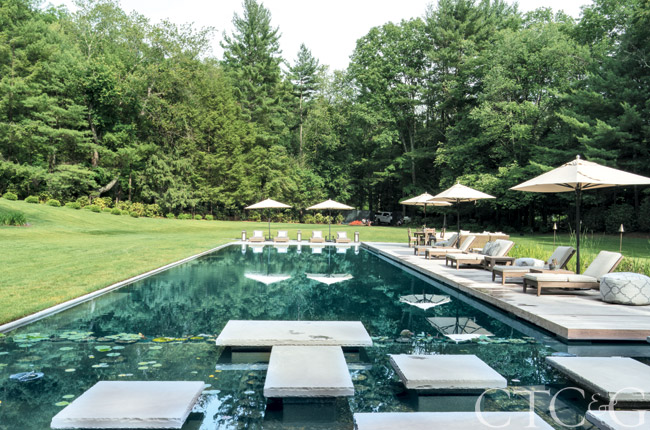
The shallow end of the swimming zone features a beach entry, a flip-turn wall and an entertaining terrace.

The arrival court is made of granite and cobblestone; soft silvery Nepeta lines the walk. Gregory Lombardi designed details throughout the garden, including all stonework and these two lanterns.
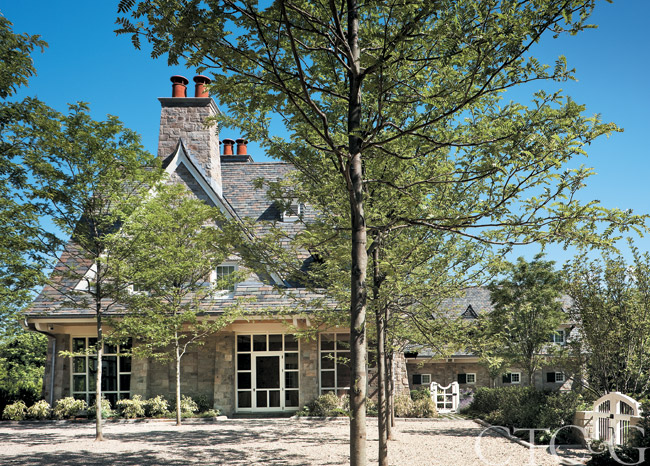
The designer took the geometry on the front of the house and connected it to the bigger landscape.
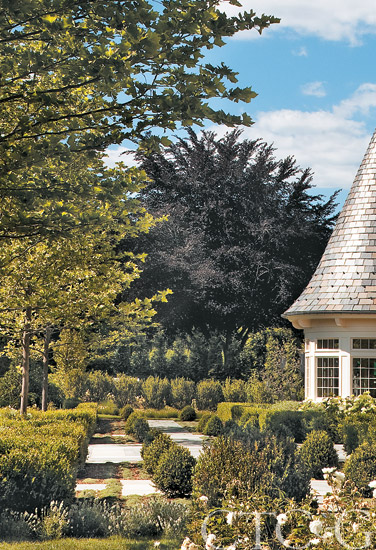
Trees form a grid to one side of the house.
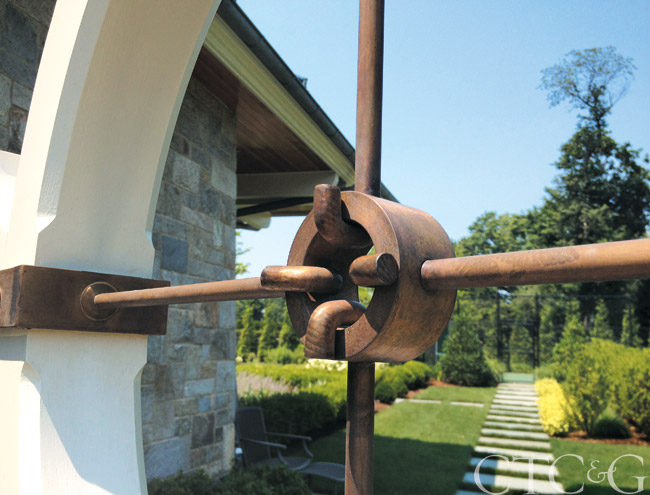
Lombardi designed a series of gates, “all as a suite, but with each one unique.” The gates are large-scale using classic forms, but the joinery is expressive of modern industrial detail.
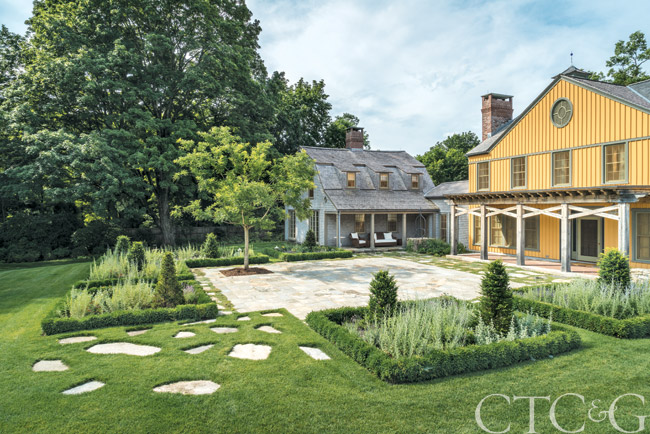
Around the house, a courtyard, terraces, herb garden, parterre and scree garden were installed to form a seamless transition between the architecture and the landscape.
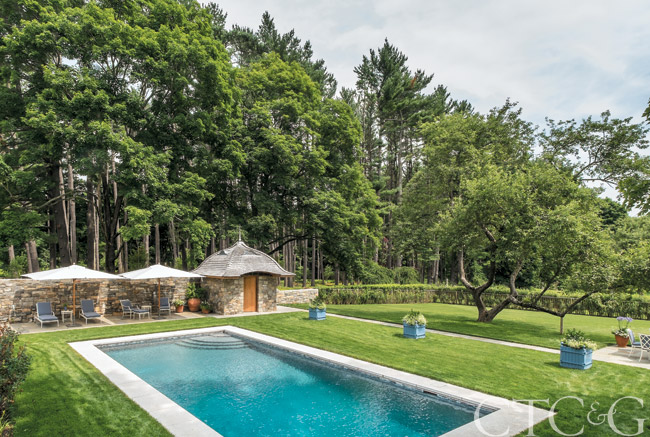
Classic French boxes planted with lemon trees line the pool by Shoreline Pools.
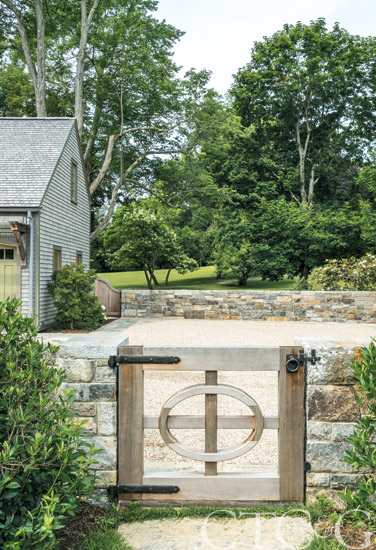
Architect McKee Patterson of Austin Patterson Disston Architects created a new approach to the house and the gate that echoes details in the architecture. Stone courtyard walls are planted with white climbing roses, wisteria and hydrangea.
